Thursday, February 24, 2005

Remember US Open at Pinehurst June 2005


Golf-Payne at Pinehurst Posted by Hello

Pinehurst - U.S. Open Golf Tournament : "The 2005 U.S. OPEN Championship: A Return to PinehurstFrom June 13-19, 2005, Pinehurst will once again have the honor of hosting the U.S. OPEN Championship. The resort became a part of American golf history when Payne Stewart captured this same title in Pinehurst in 1999. Stewart's 15-foot putt on the final hole secured his 2nd U.S. OPEN title and marked one of the most dramatic and memorable moments in U.S. OPEN history. The 2005 U.S. OPEN represents the quickest turnaround to a host site since 1946. "

Nordlinger Comments on Bush in Europe

Here again Jay Nordlinger's: "Can I grin over the president, just a little even though the topic is quite serious (a nuclear Iran)? In Brussels, he said, 'This notion that the United States is getting ready to attack Iran is simply ridiculous. Having said that, all options are on the table.'"

[Bush,] You know, on this journey to Europe, I follow in some large footsteps. More than two centuries ago, Benjamin Franklin arrived on this continent to great acclaim. An observer wrote, "His reputation was more universal than Liebniz or Newton, Frederick or Voltaire, and his character more beloved and esteemed than any or all of them." The observer went on to say, "There was scarcely a peasant or citizen who did not consider him as a friend to humankind."
I've been hoping for a similar reception. But Secretary Rice told me I should be a realist.

Together, we must make clear to the Iraqi people that the world is . . . with them, because they have certainly shown their character to the world.
An Iraqi man who lost a leg in a car bombing last year made sure he was there to vote on January the 30th. He said, "I would have crawled here if I had to. I don't want terrorists to kill other Iraqis like they tried to kill me. Today, I'm voting for peace."

Every vote cast in Iraq was an act of defiance against terror. And the Iraqi people have earned our respect.

Some Europeans joined the fight to liberate Iraq, while others did not. Yet all of us recognize courage when we see it. And we saw it in the Iraqi people."

Read the entire column if you can.

How Many Prepositions Can You End a Sentence With?

Jay Nordlinger's Impromptus on National Review Online: "'Remember the old sentence that ends in not one but five prepositions? A kid sends Mommy downstairs for a bedtime reading book. She gets the wrong one, so the kid says, 'What did you bring that book I don't want to be read to out of up for?''"

WSJ Opines on Freedom for Lebanon

"The task for the Bush Administration is to support this exercise in people power by raising the political, economic and diplomatic price Syria must pay for the occupation..."

"We cannot say whether these measures will suffice to dislodge Syria from Lebanon, but at least they're a start. What we can say is that if there was ever a moment to make an ally of the Lebanese people in their quest for freedom, this is it."

Slate: Daily Column on Blogs

Slate's new feature By Bidisha Banerjee that describes "Today's Blogs The latest chatter in cyberspace."

Peggy Noonan proposes Internet Saint

Peggy Noonan: "Why is St. Joseph Cupertino the obvious patron saint of the Internet? Because he flew through the air, lifted by truth. Because no establishment could keep him down. Because he empowered common people. Because they in fact saw his power before the elites of the time did. And because it could not be an accident that the center of the invention of the Internet, ground zero of Silicon Valley, is Cupertino, Calif., named for the saint centuries ago. "

Peggy Noonan on Harvard's President

Peggy Noonan: "His [Summers'] mistake was stepping on the real third rail in American cultural politics. It's not Social Security. It is attempting to reconcile the indisputable equality of all people with their differentness. The left thinks if we're all equal we're all alike. Others say we're all equal but God made us different, too, and maybe he did that to keep things interesting, and maybe he did it because each human group is meant to reflect an aspect of his nature. Our differentness is meant to teach us his infinite variety and complexity. It's all about God.
But what the Summers story most illustrates is that American universities now seem like Medieval cloisters. They're like a cloister without the messy God part. Old monks of leftism walk their hallowed halls in hooded robes, chanting to themselves. Young nuns of leftist deconstructionism, pale as orchids, walk along wringing their hands, listening to their gloomy music. They become hysterical at the antichrist of a new idea, the instrusion of the reconsideration of settled matter. Get thee behind me, Summers."

More on Internet Co Deals and more Tips on Free Gems

First some numbers on the NYT deal, NYT deal makes sense but looks rich: "(MarketWatch) - The New York Times Co.'s $410 million buy of About.com is a good strategic move into a growing Internet advertising market, but analysts said the publishing company paid a high price. 'Positives of the deal include exposure to higher growth Internet business and a much more diverse advertising base, and a younger demographic,' Bear Stearns analysts said Friday morning. 'Negatives include the very high price of the deal. About.com, with about 22 million unique visitors each month, provides information on thousands of topics led by a network of 500 experts called 'guides.'

The About.com deal comes nearly one month after Dow Jones & Co. (DJ: news, chart, profile) completed its $528 million acquisition of MarketWatch Inc., the publisher of this report. Weeks earlier, Washington Post Co. (WPO: news, chart, profile) agreed to acquire the online magazine Slate."

The other great free services I use now come from Google after their purchase of the groups that developed the desktop search capability that I have bragged on in an earlier post and the purchase of Picasa which provides fantastic photograph editing (better than MSN's Photoshop 7 which costs $) and other web photo manipulation tools. You may download the latest versions of Picasa 2 and Hello from Picasa through Google.

Another Internet Co Buy-out and Tips on What You Should be Using for FREE

The NYT Company purchased a division of Primedia called 'About.com' and was just another small deal that I read about (puns are too easy with this) until this week I realized that the target company was a source I was actually using. About.com is a great free source for all kinds of free information and free courses. If you are reading this you know that I am new to blogging; to learn more I have been taking a tutorial from About.com (CSS which is Cascading Style Sheets...) so I have renewed interest in the deal in hope that NYT won't start charging for the great programs.

For your information here's about About - About U.: "About U.
Welcome to About U. , a collection of free online courses from About.com.
Each online course is sent to you via email on a daily or weekly basis and is designed to help you learn a specific skill or solve a particular problem. There are no grades or degrees, only a whole lot of free online learning.... [Topics included for free are]
Arts & Entertainment Automotive Business Cities & Towns Computing & Technology Education Electronic & Gadgets Food & Drink Health & Fitness History Hobbies & Games Home & Garden Homework Help Jobs & Careers Money News & Issues Parenting & Family People & Relationships Religion & Spirituality Shopping Sports & Recreation Style Teens Travel "

Wednesday, February 23, 2005

Bush: Political Courage to Grab Third Rail

From the New Hampshire Portsmouth Herald Editorial: Bush shows political courage in putting Social Security on table: "As we all face a new era of escalating Social Security costs, and a declining ratio of workers to retirees, it is now prudent to re-evaluate the real numbers, analyze these facts, and adapt Social Security to our changing times. Just as Social Security provides a financial shield for millions of Americans today, we must also be mindful of its solvency for future generations.

Bush's plan is bold. Whether you agree or disagree, he deserves credit for taking the political risk and the political heat for putting Social Security on the table and challenging our elected officials and the American public to engage in this national debate. "

"Freedom? Why Europe's not bothered"

More editorial opinion from The Daily Telegraph : "the European philosophy of government - shortly to be permanently installed under the EU constitution - is paternalistic. At worst, it is arrogant and authoritarian.
But whatever it is, it no longer has a belief in real democracy of the kind that Americans recognise - government of the people, by the people and for the people - at its heart.
That is why Jacques Chirac - the very embodiment of corrupt European political cynicism - and George Bush can never, ever find true common ground. When the President tries to give credit where it is due - to the European authorship of democratic revolution - it sounds faintly sarcastic.
I have written before on this page that European hatred of the United States has a great deal to do with jealousy of American self-belief. But there is an element of shame there, too. Because Europe knows that it has sold the pass. It has traded liberty for security: the safety of consensus, the reassuring unfreedom of bureaucratic control and an over-regulated economy..."

"...Europeans have found something better, and more readily controlled, as a substitute for personal liberty. They have found wealth: mass prosperity and the kind of government-subsidised economic security that their countries, traumatised by generations of war and unrest, have never known. Since the Cold War ended, they have been able to consolidate the post-war economic miracle with a 'peace dividend': all that money that used to be spent on arms could go into more and more generous welfare and pension arrangements. So now they are not even fit to defend themselves, or to sort out a mess in their own Balkan backyard. Why should they join in any crazy scheme to bring peace to the rest of the world?"

This is an echo of Steyn's piece but not quite as gut wrenching.

David Ignatius on the Middle East

Ignatius with positive comments about Lebanon and Iraq. Beirut's Berlin Wall (washingtonpost.com):
"BEIRUT -- 'Enough!' That's one of the simple slogans you see scrawled on the walls around Rafiq Hariri's grave site here. And it sums up the movement for political change that has suddenly coalesced in Lebanon and is slowly gathering force elsewhere in the Arab world. "

"The leader of this Lebanese intifada is Walid Jumblatt, the patriarch of the Druze Muslim community and, until recently, a man who accommodated Syria's occupation. But something snapped for Jumblatt last year, when the Syrians overruled the Lebanese constitution and forced the reelection of their front man in Lebanon, President Emile Lahoud. The old slogans about Arab nationalism turned to ashes in Jumblatt's mouth, and he and Hariri openly began to defy Damascus. "

"'It's strange for me to say it, but this process of change has started because of the American invasion of Iraq,' explains Jumblatt. 'I was cynical about Iraq. But when I saw the Iraqi people voting three weeks ago, 8 million of them, it was the start of a new Arab world.' Jumblatt says this spark of democratic revolt is spreading. 'The Syrian people, the Egyptian people, all say that something is changing. The Berlin Wall has fallen. We can see it.' "

Anecdote Suitable for Multiple Uses

David Frum: "an old and surely apocryphal anecdote about the changing headlines in the official French newspaper Le Moniteur in 1814:

'The monster has escaped Elba!'
'The tyrant has landed at Cannes!'
'Bonaparte meets the troops.'
'Napoleon approaches Paris.'
'His Imperial Majesty has entered the capital.'"

The first parallel to my mind was President Bush and the Middle East situation in a few years.

Mark Steyn on Europe

Steyn in a rather negative forecast about the future of Europe in general and reminding America to forget about help in international problems as the EU can't take care of itself let alone the problems of others.

Telegraph Opinion Atlanticist small talk is all that's left: "Nato will not be around circa 2015 - which is why the Americans are talking it up right now. An organisation that represents the fading residual military will of mostly post-military nations is marginally less harmful than the EU, which is the embodiment of their pacifist delusions. But, either way, there's not a lot to talk about. Try to imagine significant numbers of French, German or Belgian troops fighting alongside American forces anywhere the Yanks are likely to find themselves in the next decade or so: it's not going to happen.
America and Europe both face security threats. But the difference is America's are external, and require hard choices in tough neighbourhoods around the world, while the EU's are internal and, as they see it, unlikely to be lessened by the sight of European soldiers joining the Great Satan in liberating, say, Syria. "

Not positive but makes one appreciate how good things are here compared to Europe contrary to what some people believe.

Walter E. Williams: "Social Security Deceit"

Walter E. Williams: "Vital to any Ponzi scheme, like Social Security, is the ability to recruit as many suckers as possible. In 1999, a little noticed part of President Clinton's plan to 'save' Social Security was to force 5 million previously exempted employees into Social Security. If they were forced into Social Security, it would have created billions in additional revenue. Guess what. Twelve senators, including five Democrats -- Dianne Feinstein (D-Calif.), Barbara Boxer (D-Calif.), Christopher Dodd (D-Conn.), Richard Durbin (D-Ill.) and Edward Kennedy (D-Mass.) -- descended on the White House to demand that President Clinton not support forcing 5 million of their constituents into Social Security. They warned of the adverse impact on employees in terms of lower rates of return and lost flexibility.
Isn't that great? These are the same politicians who are now resisting President Bush's call to allow Americans to take a part of their Social Security taxes to put into private retirement accounts. If they'd go to bat for those 5 million workers to remain out of Social Security, to avoid the adverse impact of lower rates of return and lost flexibility, why would they fight to deny tens of millions of workers a right to use a portion of their taxes to do the same?"

Tuesday, February 22, 2005

Tom Wolfe on Hunter Thompson in WSJ

Those three terms, Tom Wolfe, Hunter S. Thompson, Wall Street Journal, do not seem easily to roll out together but nevertheless see today's OpinionJournal - Leisure & Arts:

"Hunter's life, like his work, was one long barbaric yawp, to use Whitman's term, of the drug-fueled freedom from and mockery of all conventional proprieties that began in the 1960s. In that enterprise Hunter was something entirely new, something unique in our literary history. When I included an excerpt from 'The Hell's Angels' in a 1973 anthology called 'The New Journalism,' he said he wasn't part of anybody's group. He wrote 'gonzo.' He was suigeneris. And that he was.
Yet he was also part of a century-old tradition in American letters, the tradition of Mark Twain, Artemus Ward and Petroleum V. Nasby, comic writers who mined the human comedy of a new chapter in the history of the West, namely, the American story, and wrote in a form that was part journalism and part personal memoir admixed with powers of wild invention, and wilder rhetoric inspired by the bizarre exuberance of a young civilization. No one categorization covers this new form unless it is Hunter Thompson's own word, gonzo. If so, in the 19th century Mark Twain was king of all the gonzo-writers. In the 20th century it was Hunter Thompson, whom I would nominate as the century's greatest comic writer in the English language. "

The entire article is an honest tribute to Thompson's oddities and talents.

BTW, I heartily recommend (except for parents with kids in college) Wolfe's latest I Am Charlotte Simmons.

Monday, February 21, 2005

Speaking of Biographies...

To follow the previous post about presidential biographies I was reminded of a couple of remarks I recently read (and thanks to Google desktop search, which I hope you use just to be again amazed at technology) about Predident Clinton's My Life.

The New York Times: "...when the 41st, 42nd and 43rd presidents, on stage after the dedication of the National World War II Memorial on the Mall in Washington, shared private laughs. At one point, George H. W. Bush gave Mr. Clinton a playful but vigorous shove as a reaction to something Mr. Clinton had said. Aides could not recall this past week what it was, but one person did say the current president joked at the time that Mr. Clinton's biography, 'My Life,' was so long that he would have to read one half and his father the other."

And from Roger L. Simon: "Clinton, who certainly had the gift of policy gab, produced a book that no known person has read through. (Maybe his editor.)"

Washington's Birthday

Officially today is/was a holiday federally designated as Washington's Birthday which has morphed into President's Day. A California lawyer is fighting for the public return of Washington's Birthday. Courtesy of The Corner on NRO here's the story. I personally prefer the day remembered for our first president. I have just started reading His Excellency George Washington by Joseph J. Ellis. Over my recent equipment swaps I read David McCullough's John Adams which was very good although I must admit biographies of people one should recall quite a bit about aren't as enjoyable to me as those of people I know very little about. Not many surprise endings on famous personalities I suppose. When I have finished slogging through His Excellency I 'll give an opinion.

Gary Becker on Social Security Reform

Those of you who receive The Wall Street Journal on dead tree throughout the week should note that the paper often posts editorials online on Saturday and Sundays too. Dr. Gary Becker, a Nobel winner had excellent comments on social security reform. [The bold is mine.]

OpinionJournal: "Republicans and Democrats are arguing passionately about the future of Social Security, and the argument, at its core, is about privatization. It is true, as some critics observe, that there is no magical gain in privatizing Social Security, since all systems have to provide incomes for retired persons. By that token, however, there's no gain in privatizing a government steel plant either, since steel still has to be produced, too. Yet there are very good reasons--with roots in political economy--to privatize steel. And as with steel (and the like), there are excellent reasons for a privatized individual-account Social Security system..."

"...There is no guarantee that government interference would not increase further in such a privatized system since the retired would continue to press for additional benefits. But experience shows that governments interfere less when an industry is privatized, especially in access to capital and financing of budget deficits.

So the really strong arguments for privatization are that they reduce the role of government in determining retirement ages and incomes, and improve government accounting of revenues and spending obligations. All the other issues are really diversions, because neither advocates nor opponents of privatizing Social Security generally answer the most meaningful question: Is there as strong a political economy case for eliminating government management of the retirement industry as there is for eliminating its management of most other industries?

My answer is "yes."

[Mr. Becker, a Nobel laureate in economics, is a professor at the University of Chicago and a senior fellow at Stanford's Hoover Institution.]

The entire article is well worth a read both for those opposed to private accounts and those in favor such as me (strongly.)

Schwarzenegger is Correct on Gerrymandering

Schwarzenegger is right in his efforts to end political gerrymandering in California. I hope he succeeds and that the result becomes models for the rest of these United States. I know it is a pervasive problem in North Carolina and Texas and I suspect most states as well.

Jeff Jacoby: "The beauty of redistricting reform is that there is nothing partisan about it. It doesn't empower Rs at the expense of Ds, or Ds at the expense of Rs. It empowers voters at the expense of politicians..."

"...An end to gerrymandering would be an extraordinary shot in the arm for American democracy, once again making legislative races exciting and responsive. This is the very best kind of government reform -- the kind that can unite conservatives and liberals, Republicans and Democrats. No, honest redistricting won't turn real-life politics into a ninth grade civics class. But it will make it a lot more interesting and democratic than the farce we're stuck with now."

Sunday, February 20, 2005

The Spectator on President Bush to Europe

The Spectator.co.uk: "When George W. Bush arrives for his European visit next week, a special ceremony will be laid on in Brussels: the discreet burial of hatchets. Dinner with Jacques Chirac will start the rapprochement with Old Europe while other leaders wait in line, olive branch in hand. But there is one politician the American President certainly won't be meeting: Michael Howard. Even if the Conservative leader was at the European Union summit, he's unlikely to have been granted an audience; he languishes, unforgiven, in a special kind of purgatory.
Four months ago, before Bush's historic victory, Howard was parading his credentials as a man who would take on the Bush administration by attacking Blair over the war. "If it displeases those in the White House, that's tough," he said. With those words, a nuclear winter descended over relations between the one-time Cold War allies. The Bush administration saw an ally in Blair; in Howard, it saw a turncoat. The President can forgive hostility, but never forgets disloyalty.... "

"...Personal loyalty matters to President Bush above all other things, even party politics,’ says one senior Tory MP, well connected in Washington. ‘That’s how he works, that’s his foreign policy and it has served him well. So he takes loyalty very seriously. At the moment, I’d say relations now between our two parties are at their lowest ebb since Suez.’ And by no means all Conservatives are distraught. Several Tory MPs spent last year admiring John F. Kerry — as George Osborne, the Tory’s shadow treasury secretary, explained in this magazine a year ago. ‘It pains me to report,’ he wrote, ‘that we Bushites are a minority.’

This rift, ironically, has opened at a time when British conservatism is at a new peak of influence in the White House. After revolutionising America’s foreign policy, the Bush administration is using 1980s Britain as a blueprint for a domestic revolution. The White House’s ‘ownership society’ agenda is explicitly modelled on the Thatcher government’s policies with council houses in the 1980s: use ownership to transform people’s lives and mindsets. The aim is to move from state-dependency to empowerment.

The White House wants to sprinkle this magic on US social security: allowing workers to control part of their personal pension investments, rather than have retirement funds managed by the state. Thatcherism has never been more fashionable...."

I don't begin to understand UK politics, particularly the real opinions of the Conservatives, Tories, Labour but I find amusement in our US Republican party with the Tories and our (our as in I am a US Republican although quite liberal in my positions) new found relationship with Labour. I am particularly enamoured (I use the "u" when I am discussing international political economics) with Tony Blair in his political abilities, his courage, and his steadfastness in spite of opposition; traits I believe he shares with our own George W.

Mark Steyn: "US policy on Europe? No giggling"

Two of the people I most love to read at present are (as you may have gathered or soon will) are Victor Davis Hanson and Mark Steyn. VDH for his perspective and background and his clear writing and Steyn for his brashness, impudence, and erudite remarks.
Steyn's latest: "...the official State Department briefing paper on the European Rapid Reaction Force, the European Constitution, the European negotiations with Iran, etc. ('When these subjects come up, US policy is to nod politely and try not to giggle... "

"...In Prague in 2002, the President told fellow Nato members: "We share common values – the common values of freedom, human rights and democracy." In a post-Communist world, these are vague, unobjectionable generalities to everyone except the head hackers in the Sunni Triangle. It's when you try to flesh them out that it all gets more complicated. The reality is that Europe's very specific troubles – economic, demographic, political – derive from Europe, not America. And, if the member states of the EU are determined to enshrine constitutionally and Continent-wide the "rights" that have proved so disastrous for them as individual nations, there's not a lot America can do about it except stand well clear. Or as Mr Bush put it in his Telegraph interview yesterday: "No, I'm not going to comment [laughter]" – evidently still having trouble with the "no giggling" rule."

Always read all of Mark Steyn as you learn and usually laugh out loud. Like VDH he is published everywhere so here is Steyn's homepage. He bills himself as "The One-Man Content Provider" and actually he is almost.

Saturday, February 19, 2005

Victor Davis Hanson on the Middle East

Victor Davis Hanson on the Middle East and Reform: "Now in hindsight, few seem to object to the ostracism of Arafat or estrangement from Saudi Arabia. The moral?
As a rule of thumb in matters of the Middle East, be very skeptical of anything that Europe (fearful of terrorists, eager for profits, tired of Jews, scared of their own growing Islamic minorities) and the Arab League (a synonym for the autocratic rule of Sunni Muslim grandees and secular despots) cook up together. If a EU president, a Saudi royal, and a Middle East specialist in the State Department or a professor in an endowed Middle Eastern Studies chair agree that the United States is 'woefully naive,' 'unnecessarily provocative' or 'acting unilaterally,' then assume that we are pretty much on the right side of history and promoting democratic reform. 'Sobriety' and 'working with Arab moderates' is diplo-speak for supporting or abetting an illiberal hierarchy.... "

And, "The American effort to democratize postwar Afghanistan and Iraq has placed a heavy burden on the United States to develop a coherent and consistent policy of supporting reformers throughout the Middle East. We should continue with demands for elections in a Lebanon free of a tyrannical Syria, elevate dissidents in Iran onto the world stage, pressure for change in the Gulf, and say goodbye to Wahhabi Saudi Arabia. If Western elites are really worried about the legitimacy of past elections in Iraq, let them go instead to Lebanon where they can worry first about having any at all, and then later complain about the proper degree of voter participation. The forces of history have been unleashed and we should cease apologizing for the deluge and instead steer the waves in the right direction.

Americans understandably focus on the hot wars in Iraq and Afghanistan. Yet just as important are the unsung successes that received little praise, and then have a weird tendency to drift off into the collective global amnesia as if they arose from natural, not American-induced, reform."

Do read it all and all of anything VDH writes. His homepage can be found here.

Iwo Jima


Iwo Jima Posted by Hello

WSJ: "Sixty years ago today, more than 110,000 Americans and 880 ships began their assault on a small volcanic island in the Pacific, in the climactic battle of the last year of World War II. For the next 36 days Iwo Jima would become the most populous 7 1/2 square miles on the planet, as U.S. Marines and Japanese soldiers fought a battle that would test American resolve even more than D-Day or the Battle of the Bulge had, and that still symbolizes a free society's willingness to make the sacrifice necessary to prevail over evil--a sacrifice as relevant today as it was 60 years ago."

A Little International Economics - Again, Not to Worry about US Trade Deficits

Here are the understandable highlights {with key points in bold from me} from an article in the International Herald Tribune today - U.S. hegemony has a strong foundation: "Would-be Cassandras have found a new threat to U.S. hegemony: overdependence on foreign capital and growing foreign debt."

Despite the pervasiveness of this doomsday prophecy, U.S. hegemony is solidly grounded: It rests on an economy that is continually extending its technological lead, ensuring its continued appeal for foreign investors. The dollar's role as the global monetary standard is not threatened, and the risk to U.S. financial stability posed by large foreign liabilities has been exaggerated. If anything, the world's appetite for U.S. assets bolsters U.S. predominance rather than undermines it.
.
The classic doomsayer argument - that growing foreign indebtedness results from too little savings by Americans - neglects the fact that savings and investment are seriously undervalued in U.S. economic accounts. When you include capital gains, 401(k) retirement plans, and home values, U.S. domestic saving is around 20 percent of GDP, the same as in most other developed economies. And when you consider "intangible" investment (like new-product development and design experimentation) as part of total, the supposed increase in consumer spending as a share of GDP turns out to be a statistical artifact.
.
Indeed, much of the explanation for chronic current account deficits relates to the U.S. economy's strong fundamentals, not fatal structural flaws. Thanks to strong economic growth reinforced by a bias toward imports and a still overvalued currency, American consumers have tended to spend a disproportionate share of their incomes on imports. More important, with the United States expected to grow faster than Europe and Japan over the next decades and wealth growing rapidly in Asia, foreign private investors and central banks will continue to flock to U.S. financial markets. Asian governments must continue to finance U.S. imports of their manufactured goods, since the United States is their largest market and a major source of inward direct investment. And the spread of information technology to new sectors of the U.S. economy will make a revival of U.S.-bound private capital flows likely as well.
.
To be sure, the economy will at some point have to adjust to a decline in the dollar and a rise in interest rates. But these trends will at worst slow the growth of U.S. consumers' standard of living, not undermine the U.S. role as global pacesetter. The dollar will remain dominant in global trade, payments and capital flows, based as it is in a country with safe, well-regulated financial markets. For foreign central banks, U.S. Treasury bonds, government-supported agency bonds and deposits in highly rated banks will remain, for the foreseeable future, the chief sources of liquid reserve assets. And provided U.S. firms maintain their entrepreneurial edge - and despite much anxiety, there is little reason to expect otherwise - global asset managers will continue to want to hold portfolios rich in U.S. corporate stocks and bonds.
.
The real threat to U.S. hegemony, then, is not that the sentiments of foreign investors will make foreign debt unsustainable; it is that protectionism and isolationism at home will put an end to the dynamism, openness and flexibility that power the U.S. economy.
.
(David H. Levey was formerly managing director of Moody’s Sovereign Ratings Service. Stuart S. Brown is a professor of economics and international relations at Syracuse University.) "

Once again I am saying do not listen to the naysayers worried about US Trade Deficits (yet...) Also if you are into this the entire article is interesting and not very technical.
.

The Yankee or Dixie Quiz

Courtesy of the fine folks at Southern Appeal (a blog I heartily endorse and read regularly) you have to go take The Yankee or Dixie quiz. I scored 87% Dixie. Let me know what you scored and pass the test along.

And More from the Vatican

I found this interesting that a discussion of sainthood even touches on disagreements between Christianity and Islam. The Word From Rome February 18, 2005: "In most cases, processes for beatification involve some degree of uncertainty, since one never knows quite how it will go. Every now and then, however, there's a slam-dunk candidate for whom it's only a matter of time. Such was the case with Mother Teresa when she died in 1997, and such is the case again this week with Carmelite Sr. Maria Lucia of Jesus and of the Sacred Heart, better known as Lucia dos Santos, the last of the three visionaries of Fatima, who died last Sunday.
Lucia passed away on the 13th of the month, the same day in May 1917 that, according to the Fatima tradition, the Virgin Mary began appearing to three small children in this remote site in Portugal. It's a spot named after the wife of Ali, the cousin of the prophet Muhammed, and hence a reminder of the Muslim conquest of the Iberian peninsula. (In some Koranic schools, especially in Shi'ite circles where devotion to Fatima is strong, it's long been believed that Mary, who is also venerated in the Koran, didn't come to Fatima for Christians at all, but for the Muslims). "

If you are interested the rest of the discussion is fascinating as it delves into Pope John Paul II's faith in soon to be Saint Lucia and also the intriguing tale of the relationship between the Visionaries of Fatima and the failed assassination attempt on the Pope

Pope John Paul II Meeting Isreali and Palestinian Officials Feb. 25

The Word From Rome February 18, 2005: "The Ministers of Tourism for Israel and the Palestinian National Authority are scheduled for a joint private audience with Pope John Paul II on Friday, Feb. 25. It will be the first time that officials from Israel and the Palestinian Authority have met the pope simultaneously, and will undoubtedly be taken as another sign of a thaw in the Israeli-Palestinian relationship. "

"The two ministers are coming to Rome in large part to ask Christians to resume pilgrimages to the Holy Land, assuring them that the two sides are cooperating to assure tourists safe access to the Holy Sites and easy movement back-and-forth across borders. Due to the violence associated with the Israeli-Palestinian conflict, tourism to the region has been in decline for years. As one indicator of that reality, the number of American tourists visiting Israel in 2000, just before the second intifadah, was 539,512, according to TravelAge magazine. In 2003, it was 294,672, a decline of almost 50 percent. A 'photo op' with the pope is thus seen by both sides as an ideal way to lure potential Christian visitors. "

First, this shows the Pontiff is recovering and has His attention on the Mid-East situation. Second, the fact that officials from Isreal and the PA will be in the same room is a positive as well.

Rhett, Get That Woman a Julep! or Education: More Dissection of Harvard President Summers

More on the Harvard situation from Kathleen Parker: Truth and consequences:

"Male chauvinist pigs (remember them?) can take a vacation as long as women like MIT biology professor Nancy Hopkins are defending women's intellect. Upon hearing Summers' words, Hopkins told reporters that she felt she was going to be sick. That her 'heart was pounding' and her 'breath was shallow . I just couldn't breathe .'

Rhett, oh Rhett, get that woman a julep, for cryin' out loud. "

And "...girls are far exceeding boys in school at nearly every level. Sixty percent of college students today are female. At the high school level, girls receive 60 percent of the A's, while boys earn 70 percent of the D's and F's..."

"The larger, more compelling concern to educators would seem to be helping boys improve their reading and writing skills so that they can survive in the information age, rather than counting the number of female Ph.D.s in science as some measure of gender equality.Meanwhile, it's too bad Summers felt forced to apologize and that he faces further censure from faculty. When the president of the nation's oldest university has to say he's sorry for saying something true, the opposite of Truth seems the victor."

Flying or On a Blind Date Soon?

New York Post Online Edition: news:
" A Newark Airport security screener is being reassigned after officials said she failed to spot a 5-inch butcher knife in a passenger's pocketbook.
Katrina Bell, 27, of Greensboro, N.C., had cleared security and was waiting to board a flight with her sister on Saturday morning when she discovered she had forgotten to remove the knife from her bag. She had put it there in preparation for a blind date Thursday night, her sister, Tikisha Bell Gowens, 30, told the Star-Ledger. "

Thomas Sowell on JFK2 & Form 180

Follow up to the last post ; here is an excerpt from the Sowell column I mentioned and have since found: Thomas Sowell: Tainted media:
" One of Jimmy Carter's first acts as President was to issue an order granting amnesties to draft dodgers who had fled the country during the Vietnam war and also allowing an upgrading of military discharges that had been less than honorable.
There is more to this than simply a strange date on an honorable discharge. The covering memo refers to U.S. Code Title 10, sections 1162 and 1163. Anyone who bothers to read those sections will discover that they are about unusual circumstances for issuing discharges from the military services.
Senator Kerry never signed Form 180 to make all his military records public, as President Bush had done -- and the media didn't press him to do so. Even after Kerry's widely publicized role as a war hero was challenged by numerous men who had served with him in Vietnam, the media remained totally uninterested in checking out his record."

"Maybe there is a perfectly innocent explanation for Senator Kerry's late-dated honorable discharge during the Carter administration. But no explanation has been asked or given, even though there may also be a not so innocent explanation.
What is well known is that, during the Vietnam war, John Kerry went to Paris on his own and engaged in discussions or negotiations with representatives of the country with whom we were at war, even though he was still an officer in the naval reserve.
That raises legal questions about unauthorized personal diplomacy which naval authorities may not have overlooked as generously as the media did, and which could have affected the kind of discharge that Kerry received."

Kausfiles: "JFK2, We're Just Not That Into You!"

How to get the message to Dems 2004 loser? By Mickey Kaus:

"The 180 Solution: Has John Kerry signed his Form 180--allowing journalists full access to his military records--yet? He told Tim Russert he would! ...'Yes, I will.' ... Not much wiggle room there (though Kerry then seemed to ineptly try to craft an 'only-if-everyone-else-signs-theirs' loophole). ... Maybe Form 180 is the magic answer to the how-to-get-hm-to-go-away dilemma. Something Democrats could unite around!"

Thomas Sowell's last column also made a huge point on Kerry's Form 180. [Update-next post.]

I doubt if we ever see full disclosure of the records as it will clearly show the details of Kerry's original US Army discharge prior to the disclosed discharge during the Carter Administration - years after Kerry left the service and after the Carter pardon of almost all Vietnam related situations.

Friday, February 18, 2005

Bear Stearns: Economic Bull

David Malpass, Bear Stearns chief economist today:

"Upside Breakout on the Horizon? It's more likely than not."

"Some economy watchers have been looking for a slowdown, but a speed-up is more likely. Right now the U.S. is in the early to middle stages of a long, durable, and relatively fast expansion, one that has positive implications for U.S. and foreign equities (but not for bonds). The growth engines include the dollar's exit from deflationary territory in 2002, low interest rates, the 2003 tax cuts, and the increasing level of U.S. employment."

"Except for the third quarter of 2003 when GDP grew at 7.5 percent, annualized quarterly growth has been between 3.3 percent and 4.5 percent for each quarter since the second quarter of 2003. In all likelihood, growth for the fourth quarter of 2004 (soon to be revised) and the first quarter of 2005 will fall within that range.When the U.S. breaks out of that range, it is more likely to be toward the high side than the low side. The U.S. economy will probably register a 5 percent growth quarter before it turns in a 2.5 percent quarter. Why? Huge levels of liquidity, low inventories, unabated monetary and fiscal stimulus, a solid household balance sheet, robust investment activity, and continued strength at retail are all part of today's economic story. This is the stuff of accelerations, not slowdowns."

The Success of the 2003 Bush Tax Cuts

William P. Kucewicz on NRO Financial:
"The Bush tax cuts of 2 years ago continue to lay the foundation for a prolonged economic expansion, owing to a conspicuous shift in private expenditures from consumption to investment. The June 2003 tax cuts, in fact, are functioning precisely as promised: boosting GDP to the benefit of all Americans, regardless of income. It's one of the marvels of supply-side fiscal policy. By raising the incentive to invest, marginal tax-rate reductions augment the ratio of financial capital to labor capital, thus raising labor productivity and, in turn, accelerating growth. "

"Democrats, however, aided by a pliant (and largely economically illiterate) Washington press corps, continue to foist the fiction that the Clinton tax hikes produced the 1990s boom by closing the federal budget deficit. This is patent nonsense. For a start, they've got the cause-effect deficit-GDP relationship backwards: The deficit closed because economic growth quickened, not the other way around.GDP growth is clearly more responsive to changes in private investment than personal consumption. Personal consumption expenditures, as a percentage of GDP, have a tendency to rise during economic contractions, while private fixed investment usually shrinks; again confirming the pivotal supply-side role played by investment versus consumption. "

"Truth is, the more after-tax money people have at their disposal, the greater the propensity to save rather than to consume. Much of any increase in real DPI finds its way into nonresidential fixed investment. Increased business investment of course generates further increases in personal income (via enhanced labor productivity and corporate profitability), making even more financing available for business creation and expansion.Lastly, President Bush's envisioned ownership society would stimulate strong and lasting economic expansion. His calls for tax cuts and tax simplification, as well Social Security reform, would enhance the economy's long-term growth prospects by improving the all-important ratio of private investment to personal consumption.In jawboning members of Congress, therefore, the administration's strongest argument for new and permanent tax cuts is that they work. Tax-rate reductions redound to everyone's benefit regardless of income level by raising the incentive to invest and thus accelerating the pace of economic expansion. Yes, a rising tide does lift all boats."

The article is also accompanied with factual quantification and supporting diagrams.

Senator Burr's Duty of Honor

From John McCaslin:
"If it's his maiden speech in the U.S. Senate, then why is Sen. Richard M. Burr, North Carolina Republican, delivering a 45-minute farewell address?
Actually, Vice President Dick Cheney and Senate Majority Leader Bill Frist selected the freshman senator to deliver the traditional reading Friday of George Washington's farewell address. It has been delivered on the floor of the Senate every year, on or near Washington's birthday, since 1896.
When he finishes, Burr will inscribe his name and a few comments in a black, leather-bound book kept by the secretary of the Senate.
And how does the freshman senator feel to join other notable senators to have read the address, including Henry Cabot Lodge in 1898, Henry Cabot Lodge Jr. in 1937, Hubert H. Humphrey in 1956 and Barry Goldwater in 1957?
'The United States Senate is an institution deep in tradition,' he says, 'and I appreciate the opportunity to participate in such an honored part of that tradition.'
Last year's address was delivered by outgoing Sen. John B. Breaux, Louisiana Democrat."

Education: America's Separation of Its Mind and Soul

Much debate is going on over Ward Churchill, Lawrence Summers at Harvard, the cost of higher education, NCLB, the lack of conservative freedom in US universities, and overall public policy for education. The best summary statement of the seriousness of the situation so far is today in David Frum's Diary on National Review Online:
"The corruption of the universities is a terrible shame upon the United States and a cause of profound sadness among American conservatives. When we complain about the abuses on campus, it is not out of glee at scoring a point against an ideological opponent, but out of terrible regret that some of the most essential institutions of this great country - the institutions at which learning and inquiry ought to be honored and served - have so often perverted their best natures to serve bad causes.

America suffers from a dangerous separation of its mind and soul. Its elite intellectual institutions are too often hostile to the country's culture and founding values. As the Journal reporters mention, Harvard continues to ban ROTC from campus for fear of offending the university's militant gay lobby; as Samuel Huntington details in his important book, Who We Are, elite institutions like Harvard regard themselves as multinational, multicultural enterprises independent of the nation and the people that created, sustain, and defend them.

This separation serves nobody. It makes places like Harvard effete and irrelevant. I had lunch a little while ago with a representative of another prestigious school. 'We see it as our mission,' he told me, 'to train leaders.' But how can you do that, I asked, when you are instilling your leaders with an ideology that is despised and mistrusted by their potential followers?

At the same time, it badly disserves America to lose the services of places like Harvard. Despite the health and strength of its soul and sinew, a country cannot thrive in a dangerous world with a diseased mind."

Think about how serious this really is for America's future.

Krugman Attacks Greenspan

Paul Krugman, the former financial advisor to Enron, and the columnist I find to be the worst economic thinker in history, in his latest attack on social security privativation calls Chairman Greenspan a "partisan hack" in his column called Three-Card Maestro:

"On Wednesday Mr. Greenspan endorsed Social Security privatization. "

"...a disturbing thing about Wednesday's hearing was the deference with which Democratic senators treated Mr. Greenspan. They acted as if he were still playing his proper role, acting as a nonpartisan source of economic advice. After the hearing, rather than challenging Mr. Greenspan's testimony, they tried to spin it in their favor.But Mr. Greenspan is no longer entitled to such deference. By repeatedly shilling for whatever the Bush administration wants, he has betrayed the trust placed in Fed chairmen, and deserves to be treated as just another partisan hack. "

The entire world hangs on Dr. Greenspan's every word to Krugman's chagrin.

Thursday, February 17, 2005

Thomas E. Nugent on Economic Technology

NRO Financial:
"Since 1971, there have been three important advances in economic technology that have allowed the U.S. to maintain leadership in economic policy: the removal of the gold standard, a dramatic change in monetary policy, and pro-growth tax-rate reductions. Taken together, they represent the continuing triumph of economic technology. "

"President Bush's second term is likely to be characterized by further changes in fiscal policy that will lower taxes for most Americans and provide additional fiscal-policy stimulus to keep the U.S. economy on a growth track. One risk to a continued strong economy and bull market is the possibility that the majority of liberal politicians, along with some traditionally conservative politicians, fail to recognize the need for deficit spending when the economy is not operating at full capacity.Still, without the advances in economic technology during the last 35 years, we wouldn't be world leaders. The U.S. took the lead in the development and implementation of economic technology and changed the lion's share of world economies for the better. "

Read it all if you can.

More on Hariri from Fouad Ajami in the WSJ

OpinionJournal - Featured Article:

"It will not do for the Syrians to profess horror at this crime of Hariri's assassination. There is an old tradition, and an old saying, in the hard hill country of Lebanon about killing a man and walking in his funeral procession. The only antidote to this terrible, senseless death, is the eviction of Syria from Lebanon. "

"It would be fitting that the Syrian hegemony in Lebanon consolidated during the first war against Saddam Hussein would be undone in the course of this new campaign in Iraq."

"There is talk nowadays of spreading liberty to Arab lands, changing the ways of the Arabs, putting an end to regimes that harbor terror. The restoration of Lebanon's sovereignty ought to be one way for the Arabs to break with the culture of dictators and police states, and with the time of the car bombs. Hariri sought for his country a businessman's peace. His way was a break with the politics of charisma and ideology that has wrecked the Arab world; he believed in philanthropy and practical work. His vision may not have been stirring. But there was dignity in it, and a reprieve from the time of darkness. "

Freidman with Excellent Column

The headline that Tom Friedman had a good column is not unusual in my opinion. Mr Freidman is certainly left of me but an excellent writer and sometimes absolutely correct. Mr. Hariri's assassination has not received the attention it should in the MSM. A portion of Freidman in The New York Times: 'Hama Rules':

"Rafik Hariri stopped playing by 'Lebanese Rules' - eating any crow the Syrians crammed down Lebanon's throat - and openly challenged Syrian imperialism. If the Lebanese want to be free, they have got to take the lead. They have to summon the same civic courage that Mr. Hariri did and that the Iraqi public did - the courage to look the fascists around them in the eye, call them in the press and in public by their real names, and confront the European Union and the Arab League for their willingness to ignore the Syrian oppression.
Nothing drives a dictatorship like Syria's more crazy than civil disobedience and truth-telling: when people stop being intimidated, stand up for their own freedom and go on strike against their occupiers. The Lebanese can't play by Hama Rules and must stop playing by the old Lebanese Rules. They must start playing by Baghdad Rules.
Baghdad Rules mean the Lebanese giving the Syrian regime - every day, everywhere - the purple finger. "

Wednesday, February 16, 2005

Washington Post AGREES with Personal Retirement Account Reasoning

Mr. Bush's Personal Accounts (washingtonpost.com):

"It's true that personal accounts, by themselves, would not reduce Social Security's deficit. Mr. Bush's proposal gives workers the option of diverting part of their Social Security taxes into personal accounts; in return, workers who exercise that option accept a cut in future payments from the traditional Social Security system. This exchange is designed to be financially neutral for the government: hence the official comments. But this doesn't mean that personal accounts have no impact on Social Security's solvency. By investing partly in stocks, personal accounts would boost benefits for the average retiree -- and hence make it politically easier to take the tough steps necessary to fix the solvency problem. "

"In short, the equity premium is real even though its precise size is unknowable; it amounts to a strong argument in favor of personal accounts. "

Social Security:An Eighth of Every Paycheck

OK, just a couple of blasts from the recent past before I go real time. Check out the Boston Globe Op-ed:

"YOU DON'T have to be a financial wizard to know that Social Security is a lousy investment. Unlike the money you deposit in a bank or salt away in an IRA, you don't own the money you pay into Social Security. You have no legal right to get those dollars back, and when you die you can't pass them on to your heirs. Nor can you use your Social Security account before you retire -- you can't borrow against it and you can't cash it in. You aren't allowed to put the money into a balanced portfolio. You can't even watch as the interest accumulates, since your Social Security nest egg doesn't earn any interest."

"Your nest egg, in fact, doesn't even exist. Because Social Security is financed on a pay-as-you-go system, the dollars withheld from your paycheck today are immediately paid out to retirees. The benefits you receive when you retire will be funded by the payroll taxes then being collected. "

"Social Security wasn't always a sucker's game. As with all Ponzi schemes, players who got in early made out like bandits. For many years, Social Security deductions were minuscule. Until 1949, the combined employer/employee tax rate was only 2 percent, and it was imposed on just the first $3,000 of income, for a maximum payroll tax of just $60 a year. The first Social Security recipient was Ida May Fuller of Ludlow, Vt., who retired in 1940 after having paid a grand total of $44 in payroll taxes. By the time she died in 1975, she had collected $20,933.52 in benefits -- a return on her ''investment' of more than 47,000 percent."

"And a generation later? Today Social Security skims off 12.4 percent of the first $90,000 earned -- one-eighth of every paycheck. There are no exemptions, no deductions. It kicks in from the very first dollar of income. It is the biggest tax the average American household faces -- 80 percent of us pay more in Social Security taxes than we do in income tax.One tiny notch at a time, payroll taxes have been ratcheted up to a level that would have been unthinkable in Franklin Delano Roosevelt's day. No wonder Social Security is so unpopular among the young. It provides no security for their retirement, while impoverishing them in the present. In exchange for an eighth of their earnings today, it guarantees nothing but higher taxes tomorrow. That there are politicians who defend this arrangement wouldn't have surprised FDR. But how shocked he would be that they call themselves Democrats."

Finally Back

My "return shortly" was longer than I imagined. To make a long story very short, I sold one monitor which led to other things.... Anyway, I am back. I will not attempt to comment on all that has happened in the meantime knowing you are up to speed but merely resume posting as if the time warp never happened.

Monday, January 24, 2005

Away for a Few Days

I will be away from posting for a few days as I trade out and bring in some equipment and catch up on some other things for a few days. Back soon!

Mark Steyn on the Democrats: "cynicism and delusion"

He's a worldbeater, all right:

"The Democrats' big phrase is 'exit strategy.' Time and again, their senators demanded that Rice tell 'em what the 'exit strategy' for Iraq was. The correct answer is: There isn't one, and there shouldn't be one, and it's a dumb expression. The more polite response came in the president's inaugural address: ''The survival of liberty in our land increasingly depends on the success of liberty in other lands.'' Next week's election in Iraq will go not perfectly but well enough, and in time the number of U.S. troops needed there will be reduced, and in some more time they'll be reduced more dramatically, and one day there'll be none at all, just a small diplomatic presence..."

"...On Sept. 11, the world came unspun: There's no shame in acknowledging, as Condi Rice did last week, that previous policy -- Republican and Democrat -- toward the Middle East is wrong. But there's something silly and immature about a party that, from Kerry to Boxer to Byrd, can't get beyond spin, grandstanding and debater's points....

"If the president's speech yoked idealism and realism, that doesn't leave much for dissenting Dems except their own peculiar combination of cynicism and delusion."

[Bold was mine.] Steyn never pulls any punches.

The Economist on George Bush's Second Term

Economist.com George Bush's second term:

"George Bush began his second term with a speech calling for freedom around the world. But for the conservative, radical president, freedom also means big changes to domestic programmes. Can Mr Bush realise his vision of an ownership society?"

"...the president also has a vision of completing the unfinished work of American freedom. For him, this means a society that gives every citizen a stake in the promise and future of our country. It sounds like anodyne stuff, but it has a very specific meaning. In his second term, the president will attempt a radical transformation of some of the mainstays of the American economy, in particular the tax code and the pension system."

"So the fiscal squeeze will make it hard for Mr Bush to achieve his two biggest goals: reforming the tax code and introducing private accounts into Social Security, the federal pensions programme. Overhauling Social Security will incur big transition costs, even if the move to private accounts is eventually successful. Reforming the tax system need not, in principle, make the deficit worse. But if Mr Bush simplifies the tax code (which is politically popular) he will also have to broaden the tax base (which is not). The prospects for Social Security reform depend on who wins the communications war. "

"The Democrats will have their own communications strategy. In particular, they will raise the spectre of cuts in guaranteed benefits: if the contributions of the young are siphoned off into private accounts, there is no way to promise current levels of benefits to the old without actually making the deficit worse. And the Democrats have experience in demagoguery on entitlement cuts. In the late 1990s, they successfully painted the Republican Congress's plans to slow Medicare growth as throwing Granny out of her wheelchair. Now, the Democrats will say, the Republicans want to snatch the pension from her purse, too.

Despite the risks, Mr Bush will move early and forcefully on Social Security. Less clear are the prospects for reform of the tax code. Breathless conservatives around him want to increase America's dismal savings rate by shifting the tax burden from investment income to consumption. But such a radical overhaul is unlikely, especially if Mr Bush has already expended a great deal of political capital on Social Security. Instead, the president is likely to focus on making his first-term tax cuts permanent and introducing some other changes at the margin. One would be to eliminate the Alternative Minimum Tax (AMT), originally devised to keep the rich from finding too many loopholes, but now hitting many upper-middle income families. Killing the AMT will require finding money elsewhere. Mr Bush says he wants to cut other deductions and loopholes such as the deduction of state income taxes from federally taxable income. But each loophole has a vocal constituency, both in Congress and among voters.

Mr Bush may feel a wind at his back thanks to his re-election. But he has set himself mammoth tasks."

Read it all if you can for the full slanr from The Economist.

Sunday, January 23, 2005

Bush Ventures Out Into Snow for Alfalfa Club Dinner

"The president and his wife, Laura, braved snow-covered downtown streets in their motorcade to attend to the Alfalfa Club dinner Saturday, an annual event where Washington political and business leaders gather to give humorous speeches."

"The club is named after the alfalfa plant because its roots will range far afield to reach liquid refreshment. Its sole task is holding the annual dinner. "

I never knew.

Friedman's Latest from Paris

Friedman in Europe, Divided We Stand:

"Paris - There's only one thing you can say about the elections in Iraq: They are either going to be the end of the beginning there or the beginning of the end.

Either Iraqis turn out in large numbers to take control of their own future and write their own constitution - and I think they will - or the fascist insurgents there prevent them from doing so,... I've argued the war on terrorism is really a war of ideas within the Muslim world - a war between those who want to wall Islam off from modernity, and defend it with a suicide cult, and those who want to bring Islam into the 21st century and preserve it as a compassionate faith. This war of ideas is not one that the West can fight, only promote. Muslims have to fight it from within. That is what is at stake in the Iraqi elections. This is the first great battle in the post-9/11 war of ideas. "

"I spent Friday morning interviewing two 18-year-old French Muslim girls in the Paris immigrant district of St.-Ouen. (It is about a mile from the school where in March 2003 a French Muslim girl, who had refused the veil and rebuffed the advances of a Muslim boy, was thrown into a garbage can by three Muslim teenagers, who then tossed lighted cigarette butts into the can and closed the lid.) Both girls I interviewed wore veils and one also wore a full Afghan-like head-to-toe covering; one was of Egyptian parents, the other of Tunisian parents, but both were born and raised in France. What did I learn from them? That they got all their news from Al Jazeera TV, because they did not believe French TV, that the person they admired most in the world was Osama bin Laden, because he was defending Islam, that suicide 'martyrdom' was justified because there was no greater glory than dying in defense of Islam, that they saw themselves as Muslims first and French citizens last, and that all their friends felt pretty much the same.

We were not in Kabul. We were standing outside their French public high school - a short ride from the Eiffel Tower. "

Another Critic On Krugman's Column

And from JustOneMinute which takes longer than a minute but is simple actually:

"The Earnest Prof has an unsolved arithmetic problem; perhaps we can help him with it.

...if we take into account realistic estimates of the fees that mutual funds will charge - remember, in Britain those fees reduce workers' nest eggs by 20 to 30 percent - privatization turns into a lose-lose proposition."

"Hmm, since my beer is cold, I know I am not in Britain, so what might a realistic estimate of cumulative fund fees be here in the States? "

"The CBO, in their July 2004 evaluation, assumed account fees of 0.30% per annum on total assets, which seems plausible for the types of comparable funds run by the Federal Thrift Savings Plan. Shall we try a simple calculation to help the Prof?

Suppose we are 20 years old, and our annual contribution will be an even $1,000 for the next 45 years. Let's keep this real simple, and assume we put the first $1,000 in a no-interest checking account with a 0.30% annual fee. This means that my first $1,000 will be charged $3 in the first year. If I had a spreadsheet (I will in a minute) I would reduce the $1,000 balance by that amount and calculate a new, slightly smaller fee for the second year. But for purposes of this estimation, lets just reduce my $1,000 deposit by $3 each year for 45 years. In that case, the total fees charged on my first $1,000 deposit are ($3 x 45) = $135. That is 13.5% of my initial deposit. But wait! I will also make deposits in subsequent years, and none of them will be charged fees over a full 45 year term. Good point. The last deposit will be charged a fee for just one year; taking a quick average of 45 years and 1 year, we can estimate that the average term is 23 years. The average fee is then $3 x 23, or $69. This is roughly 7% of my $1,000 deposit. Seems too easy, doesn't it? Well, with a modest spreadsheet, we can vary the growth rate in the annual deposit, and plug in an annual return on the account balance. Both of these factors make the account balance, and hence the annual fee, get larger. For 0% deposit growth and a 0% account return, the ending ratio, after 45 years, of an account with a 0.30% fee can be compared to a no-fee account."

"The result is a bit lower than our 7% estimate, coming in at 6.3%. For an account with 5% annual deposit growth (that would represent rising wages), and a 15% account return (that would be an astonishing stock market run), the expenses consume 8.5% of the 'no-fee' account. So the 'right' answer is somewhere in the 6% to 8% range. But hold on! Didn't Paul Krugman just ask for a 'reasonable' estimate, and throw out 20% to 30% in Britain as a comparison? Based on the CBO number and some mental math, we came to 7%, which was quickly confirmed by a more elaborate calculation.

Why, oh why is Prof. Krugman off by a factor of 300% to 400%? How can it be that he is misrepresenting the intelligence and hyping his case? You've got me. Possible answers might include: (a) this was too complicated a calculation for a prospective Nobel Laureate; (b) this was an easy calculation but not a helpful result for polemical purposes; or (c) his beer was warm, and all the folks in Princeton speak English, so he thought he was in Britain.

Enjoy the weekend - pick (a), and put yourself up for a Nobel Prize."


On Krugman's Latest Rant - Other Opinions

Courtesy of Instapundit from Scrivener.net:

"Yet again Paul Krugman attacks private accounts for Social Security with the claim that returns in stocks will be not high enough and 'risky'."

"And who does Krugman choose to invoke as an authority for his argument? Why, who could be more impressive than the academic world's most noted advocate of stocks as a long-term investment, Prof. Jeremy Siegel of Wharton... That's why even Jeremy Siegel, whose 'Stocks for the Long Run' is often cited by those who favor stocks over bonds, has conceded that 'returns on stocks over bonds won't be as large as in the past.'

But a very high return on stocks over bonds is essential in privatization schemes... Yet wait a minute. With Krugman (not to mention the other NY Times op-eders) you can never trust a quote. Let's do a quick Google search. Yes, here's what Siegel actually said ... 'I agree that returns on stocks over bonds won't be as large as in the past. But I'm more optimistic than Rob. Looking over the next quarter-century, I see a 5%-to-6% return on stocks, adjusted for inflation. I'm pessimistic about real bond returns. I think they're likely to be in the 0%-to-1% range over the next five years, and closer to 3% after that...'

My gosh! In support of his argument that the spread between bond and stock yields must close so that stocks cease to be a more attractive investment than bonds, Krugman quotes Jeremy Siegel arguing exactly the opposite in Forbes, making the case for stocks as a better long-term investment than bonds."

Saturday, January 22, 2005

GWOT -Too Much Information - Is Anything Secret Anymore?

The nature of what is top secret and what is in our newspapers continues to evolve downward in terms of national security even during the global war on terror (GWOT) - from the NYT: In Terror Fight, Domestic Roles for U.S. Troops: [The bold marks are mine.]

"Somewhere in the shadows of the White House and the Capitol this week, a small group of super-secret commandos stood ready with state-of-the-art weaponry to swing into action to protect the presidency in ways that have never been fully revealed before. As part of the extraordinary army of 13,000 troops, police officers and federal agents marshaled to secure the inauguration, these elite forces were deployed under a 1997 authorization that was updated and enhanced after the Sept. 11 attacks, but nonetheless departs from how the military has historically been used on American soil.

These commandos, operating under a secret counterterrorism program code-named Power Geyser, were mentioned publicly for the first time this week on a Web site for a new book, 'Code Names: Deciphering U.S. Military Plans, Programs and Operation in the 9/11 World,' (Steerforth Press), by William M. Arkin, a former Army intelligence analyst. The precise number of these Special Operations forces in Washington this week is highly classified, but military officials say the numbers are very small, probably not exceeding a few dozen. The special-missions units belong to the Joint Special Operations Command, a secretive command based at Fort Bragg, N.C., whose elements include the Army unit Delta Force. In the past, the command has also provided support to domestic law enforcement agencies during high-risk events like the Olympics and political party conventions, according to the Web site of GlobalSecurity.org, a research organization in Alexandria, Va...."

"Mr. Arkin's book is a glossary of more than 3,000 code names of past and present operations, programs and weapons systems, with brief descriptions of each. Most involved secret activities, and details of many of the programs could not be immediately confirmed. The book also describes American military operations and assistance programs in scores of countries, from Afghanistan to Zimbabwe.

The murky world of 'special access programs' and other secret military and intelligence activities are covered in the book, too. Some code names describe highly classified research programs, like Thirsty Saber, a program that in the 1990's tried to develop a sensor to replace human reasoning. Others describe military installations in foreign countries, like Poker Bluff I, an electronic-eavesdropping collection station in Honduras in the 1980's. Many involve activities related to the survival of the president and constitutional government.

The book, for instance, describes Site R, one of the undisclosed locations used by Vice President Dick Cheney since the Sept. 11 attacks. Site R is a granite mountain shelter just north of Sabillasville, Md., near the Pennsylvania border. It was built in the early 1950's to withstand a Soviet nuclear attack. Mr. Arkin said that 28 positions in the government were covered in the presidential succession plan, including 15 cabinet members, the speaker of the House and president pro tem of the Senate. A White House spokesman declined to comment on the continuity of government activities cited in the book."

William Kristol on The Speech

On Tyranny:

"A social science that cannot speak of tyranny with the same confidence with which medicine speaks, for example, of cancer, cannot understand social phenomena as what they are.
--Leo Strauss, On Tyranny

Tyranny, like hell, is not easily conquered. Yet we have this consolation with us, that the harder the conflict the more glorious the triumph.
--Thomas Paine, The Crisis


INFORMED BY STRAUSS and inspired by Paine, appealing to Lincoln and alluding to Truman, beginning with the Constitution and ending with the Declaration, with Biblical phrases echoing throughout--George W. Bush's Second Inaugural was a powerful and subtle speech.

It will also prove to be a historic speech. Less than three and a half years after 9/11, Bush's Second Inaugural moves American foreign policy beyond the war on terror to the larger struggle against tyranny. It grounds Bush's foreign policy--American foreign policy--in American history and American principles. If actions follow words and success greets his efforts, then President Bush will have ushered in a new era in American foreign policy. "

"...If the critics of the speech who have denounced it as simple-minded were to read it, they would find it sophisticated. They might even find it nuanced.

Still, sophisticated and nuanced as it is, it does proclaim the goal of ending tyranny. And just as Truman's speech shaped policy, so Bush's will. As he implicitly acknowledges, his presidency will be judged not by this speech but by his achievements. The speech, by laying out a clear and compelling path for U.S. foreign policy, will make substantial achievements easier. There will be vigorous debates over how to secure these achievements--debates over defense spending and diplomacy, over particular tactics and operational choices. We will at times differ with the president on some of these matters, as we have at times in the past. But on the fundamental American goal, President Bush has it right--profoundly right."

David Brooks on The Speech: Ideals and Reality

Brooks, who to me seems to be getting better and better with Ideals and Reality:

"Bush's speech, which is being derided for its vagueness and its supposed detachment from the concrete realities, will still be practical and present in the world, yielding consequences every day. With that speech, President Bush's foreign policy doctrine transcended the war on terror. He laid down a standard against which everything he and his successors do will be judged."

"...Bush's inaugural ideals will also be real in the way they motivate our troops in Iraq. Military Times magazine asked its readers if they think the war in Iraq is worth it. Over 60 percent - and two-thirds of Iraq combat vets - said it was. While many back home have lost faith, our troops fight because their efforts are aligned with the core ideals of this country, articulated by Jefferson, Walt Whitman, Lincoln, F.D.R., Truman, J.F.K., Reagan and now Bush.

Americans are, as George Santayana observed, 'idealists working on matter.' On Thursday in Washington, the ideal and the material were on ample display. And we're reminded once again that this country has grown rich, powerful and effective not because its citizens are smarter or better, but because the ideals bequeathed by the founders are practical and true. "

Friday, January 21, 2005

Public Embarrassment for My Great State

N. Carolina Capital Disabled by Inch of Snow :

"An inch of snow crippled North Carolina's capital -- and prompted plenty of finger-pointing -- Thursday "

"It was not until late Wednesday that Gov. Mike Easley (D) declared a state of emergency, allowing him to open two state government buildings in downtown Raleigh as shelters to accommodate drivers. He asked residents to stay home Thursday morning so crews could clear the roads."

This was marked by much laughter in Western North Carolina and I am sure by all people used to snow in the wintertime.

One British Opinion on the Inaugural Address

Not all Europeans would agree with this from The Times:

"By contrast, George Washington offered the shortest inaugural address to his fellow countrymen. ... Yet, if inclined, George W. Bush could comfortably beat that record in Washington on Thursday. He might legitimately stand up and state in five blunt words: "I own this town now" and then sit down again. And for the next 18 months or so he indeed will.

"...Mr Bush's personal authority, at least until 2007, may be really exceptional. Only Franklin D. Roosevelt has been equivalently placed in the past 100 years. This might oblige his many vocal critics, who have habitually mocked him, to deliver their own five-word speech this Thursday. It should read: "He is not an idiot."

LA Weekly: Features: On: A Vision of Our Own

"...today's left remains mired in a reflexive, defeatist negativity that became obvious after the election. The Nation's subscribers sent letters calling Bush voters racists, homophobes, warmongers and yahoos. Peter Beinart wrote a much-bruited New Republic piece saying that the Democrats needed to purge polarizing figures like Michael Moore (as if Karl Rove didn't thank God, er, Beelzebub, every single day for the presence of right-wing firebrands like Rush and Sean). Meanwhile, the blogosphere was filled with 'Fuck the South' e-mails and lazy ruminations on the 'red states,' a cliche that manages to insult one's intelligence and the people it supposedly describes. Much of this was rhetorically disastrous, smacking of contempt for the very people the left is hoping to persuade. Reading such things, I was often reminded of that famous old Brecht poem, 'The Solution,' in which he slyly suggests that if the East German government is unhappy with its citizens' behavior, it ought to dissolve the people and elect another."

The LA Weekly is an interesting alternative to The LA Times.

Bill Safire on Bush's 'Freedom Speech'

Safire on Bush's 'Freedom Speech':
"On his way out of the first Cabinet meeting after his re-election, President Bush gave his longtime chief speechwriter the theme for the second Inaugural Address: 'I want this to be the freedom speech.'
In the next month, the writer, Michael Gerson, had a heart attack. With two stents in his arteries, the recovering writer received a call from a president who was careful not to apply any deadline pressure. 'I'm not calling to see if the inaugural speech is O.K.,' Bush said. 'I'm calling to see if the guy writing the inaugural speech is O.K.'"

"...the Texan evoked J.F.K.'s 'survival of liberty' phrase to convey his central message: 'The survival of liberty in our land increasingly depends on the success of liberty in other lands.' Bush repeated that internationalist human-rights idea, with a slight change, in these words: 'The best hope for peace in our world is the expansion of freedom in all the world.' The change in emphasis was addressed to accommodationists who make 'peace' and 'the peace process' the No. 1 priority of foreign policy. Others of us - formerly known as hardliners, now called Wilsonian idealists - put freedom first, recalling that the U.S. has often had to go to war to gain and preserve it. Bush makes clear that it is human liberty, not peace, that takes precedence, and that it is tyrants who enslave peoples, start wars and provoke revolution. Thus, the spread of freedom is the prerequisite to world peace. It takes guts to take on that peace-freedom priority so starkly. Bush, by retaliatory and pre-emptive decisions in his first term - and by his choice of words and his tall stance in this speech, and despite his unmodulated delivery - now drives his critics batty by exuding a buoyant confidence reminiscent of F.D.R. and Truman. He promised to use America's influence 'confidently in freedom's cause.' He jabbed at today's Thomases: 'Some, I know, have questioned the global appeal of liberty, though this time in history, four decades defined by the swiftest advance of freedom ever seen, is an odd time for doubt.'"

Krugman Continuing to Rant against Social Security Reform: Anything He Hates Is Universally A Good Thing

Paul Krugman, former advisor to Enron, pseudo-economist, and full time kookin the NYT on Friday:

"Sometimes I do find myself puzzled: why don't privatizers understand that their schemes rest on the peculiar belief that there is a giant free lunch there for the taking?

But then I remember what Upton Sinclair wrote: 'It is difficult to get a man to understand something when his salary depends on his not understanding it.' " [italics mine-WAA]

Krugman obviously likes this quote because it defines his existence with the NYT and his use of his supposed knowledge of economics. As you may can tell I don't like Krugman at all. Period.

Thursday, January 20, 2005

Tom Friedman: An American in Paris

Friedman, who I do enjoy reading and respect although with whom I may disagree from time to time, had this interesting concluding point written for Inauguration Day in his column An American in Paris:

"Funnily enough, the one country on this side of the ocean that would have elected Mr. Bush is not in Europe, but the Middle East: it's Iran, where many young people apparently hunger for Mr. Bush to remove their despotic leaders, the way he did in Iraq.

An Oxford student who had just returned from research in Iran told me that young Iranians were 'loving anything their government hates,' such as Mr. Bush, 'and hating anything their government loves.' Tehran is festooned in 'Down With America' graffiti, the student said, but when he tried to take pictures of it, the Iranian students he was with urged him not to. They said it was just put there by their government and was not how most Iranians felt.

Iran, he said, is the ultimate 'red state.' Go figure. "

This to me unlike perhaps Mr. Friedman meant his "Go figure" is to me a good thing and perhaps a precursor of the President's speech which is billed to be about FREEDOM.

Stating the Important and the Obvious

"Republicans in Congress do have a new, and rare, opportunity. In Mr. Bush, they have a president willing to use his bully pulpit to promote large and long-term reforms, notably on Social Security, health care, liability law, taxes and the judiciary. Doing even two or three of these would be a major achievement."
-Paul Gigot, WSJ

Tuesday, January 18, 2005

Brooks on Democrats, Social Security, and His Diagnosis

David Brooks in the NYT on The Gingrich Democrats:
"There is an essential asymmetry in American politics today. There are three conservatives in this country for every two liberals. A Republican can be quite conservative - like Ronald Reagan or George W. Bush - and still win the White House. But only one Democratic presidential candidate has won over 50 percent of the vote in the past 40 years (Jimmy Carter got 50.1 percent in 1976).

That means Republicans can rely on their core instincts and still win, while Democrats cannot. If you look at the race for Democratic Party chairman, you get the impression this is a party that understands this and will seek out people who see the world differently.

But if you look at the campaign against Social Security reform in Congress, you see a party still believing the old ideas will work if only they are pursued more ruthlessly.

This is a delusion. Newt Gingrich did help Republicans regain the majority. But that doesn't mean his tactics, even in caricature form, will work for the Democrats, whose problems are deeper. The truth is that Democrats probably need a leader who will make liberals feel uncomfortable, the way Clinton did, not someone who will make them feel righteous and good. "

Monday, January 17, 2005

Benjamin Franklin's Birthday

Today, January 17 is also Benjamin Franklin's birthday. Were he still alive he would be 299 years old today. Next year will be the 300th and Franklin will be our first founding father to reach that point I think. Happy Birthday, Ben!

Martin Luther King Photographs & Quotes

A wonderful collection of photographs from Time is available:Martin Luther King : "PHOTOGRAPHS BY FLIP SCHULKE/CORBIS" and is worth your time to review and remember.

In addition each photo is accompanied with pertinent quotes from Dr. King and for convenience are below as well (but are more meaningful with the photos):

ON NONVIOLENCE (From Birmingham jail, 1963): 'In your statement, you asserted that our actions, even though peaceful, must be condemned because they precipitate violence. Isn't this like condemning Jesus because his unique God-consciousness and never-ceasing devotion to God's will precipitated the evil act of the Crucifixion?' "

"ON BLACKS IN AMERICA (From Birmingham jail, 1963): 'Before the Pilgrims landed at Plymouth, we were here. Before the pen of Jefferson etched across the pages of history the majestic words of the Declaration of Independence, we were here. If the inexpressible cruelties of slavery could not stop us, the opposition we now face will surely fail. We will win our freedom because the sacred heritage of our nation and the eternal will of God are embodied in our echoing demands.' "

"ON NONCOMFORMITY (1963): 'This hour in history needs a dedicated circle of transformed nonconformists. Dangerous passions of pride, hatred and selfishness are enthroned in our lives; truth lies prostrate on the rugged hills of nameless Calvaries. The saving of our world from pending doom will come, not through the complacent adjustment of the conforming majority, but through the creative maladjustment of a nonconforming minority.' "

"ON BLACK POWER (1967): 'Today's despair is a poor chisel to carve out tomorrow's justice. Black Power is an implicit and often explicit belief in black separatism. Yet behind Black Power's legitimate and necessary concern for group unity and black identity lies the belief that there can be a separate black road to power and fulfillment. Few ideas are more unrealistic. There is no salvation for the Negro through isolation.' "

"ON MARCHING FOR CIVIL RIGHTS (Selma to Montgomery, 1965): 'Like an idea whose time has come, not even the marching of mighty armies can halt us. We are moving to the land of freedom. Let us march to the realization of the American dream. Let us march on segregated housing. Let us march on segregated schools. Let us march on poverty. Let us march on ballot boxes, march on ballot boxes until race baiters disappear from the political arena, until the Wallaces of our nation tremble away in silence.' "

"ON PEACE (1964): 'Sooner or later all the people of the world will have to discover a way to live together in peace and thereby transform this pending cosmic elegy into a creative psalm of brotherhood. I refuse to accept the view that mankind is so tragically bound to the starless midnight of racism and war that the bright daybreak of peace and brotherhood can never become a reality. This is why right temporarily defeated is stronger than evil triumphant.' "

"ON THE DREAM OF FREEDOM (1963): 'So even though we face the difficulties of today and tomorrow, I still have a dream. I have a dream that one day this nation will rise up and live out the true meaning of its creed . . . that all men are created equal. I have a dream that one day even the state of Mississippi, a state sweltering with the heat of oppression, will be transformed into an oasis of freedom and justice. I have a dream that my four little children will one day live in a nation where they will not be judged by the color of their skin but by the content of their character. I have a dream today. And if America is to be a great nation, this must become true.' "

"ON FREEDOM (1963): 'So let freedom ring. From the prodigious hilltops of New Hampshire, let freedom ring. From the mighty mountains of New York, let freedom ring. From the heightening Alleghenies of Pennsylvania, let freedom ring. But not only that; let freedom ring from Stone Mountain of Georgia. Let freedom ring from every hill and molehill of Mississippi. And when this happens, when we let it ring, we will speed that day when all of God's children, black men and white men, Jews and Gentiles, Protestants and Catholics, will be able to join hands and sing in the words of the old Negro spiritual: Free at last, free at last/Thank God Almighty, we're free at last.' "

"ON HIS OWN FUTURE (April 3, 1968): 'We've got some difficult days ahead. But it really doesn't matter with me now. Because I've been to the mountaintop. I won't mind. Like anybody, I would like to live a long life. Longevity has its place. But I'm not concerned about that now. I just want to do God's will. And he's allowed me to go up to the mountain. And I've looked over, and I've seen the Promised Land. I may not get there with you, but I want you to know tonight that we as a people will get to the Promised Land. So I'm happy tonight. I'm not fearing any man. Mine eyes have seen the glory of the coming of the Lord. ' "

On a personal note, this last speech as troubled me for some time. As you recall, Dr. King was assassinated on April 4, 1968 one day after he said, "...I've been to the mountaintop....I would like to live a long life....But I'm not concerned....I just want to do God's will.... Dr. King was 39 years old when he was murdered the next day.
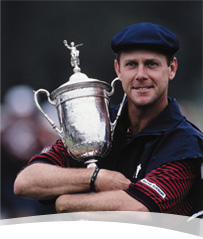
Martin Luther King, Jr. (Jan 15,1929-April 4,1968)


Martin Luther King, Jr. Posted by Hello

On this Martin Luther King, Jr. Memorial day I think it is important that we take some time today and think about who he was, what he did, and most importantly why we honor him and why indeed he really is an American hero.

I was only six years old in 1963 when he wrote the "Letter from the Birmingham Jail" yet I remember seeing him on Walter Cronkite's CBS News; I am not sure I realized he was in the jail or if I thought it was another story somebody wrote. I remember clearly growing up in the south that at my house we said Negro and not the other word used a lot in the South of the '50's, '60's, and sadly even today. I remember 1963 mostly for the Kennedy assassination and the Oswald killing because it was on TV so much (the Ruby attack was almost live as I watched.) I remember 1968 for both Dr. King and Bobby Kennedy's assassinations. I remember a lot of civil unrest and riots in US cities both over racial issues and over the Vietnam war.

What particularly strikes me now looking back is how unimportant the racial side of the violence seemed to me at the time. I knew people, especially family, in Vietnam and that was very real to me but racial conflict seemed more distant from my world than the war. I was well read at an early age and had read a lot of history (my history text was "The War Between the States" not "The Civil War") and quite a bit of literature that explained more about black and white relations than my own experience ever could. I knew Martin Luther King was a very good speaker and that he stood up for Negro rights but I had no clue of the "black experience" or however I should refer to it today.

With more knowledge and an appreciation of Dr. King's speeches, writings and particularly the volatile nature of the situation in those times I see what he as a leader accomplished. I can't imagine anyone in today's news doing what he was able to do. Also looking back it is indeed remarkable that he won (deservedly so unlike Pres. Carter but I'll save that for another day.) in 1964 at the age of 35.

Much more in following posts with examples and comments on his major writing, positions, and what it means in this century.

A Boy Named Yahoo!

This a true story and not about a boy named Sue. It's a Boy!:

"BUCHAREST (Reuters) - A Romanian couple named their son Yahoo as a sign of gratitude for meeting over the Internet, a Bucharest newspaper said Thursday.

Daily Libertatea said Cornelia and Nonu Dragoman, both from Transylvania, met and decided they were meant for each other following a three-month relationship over the net.

They married and had a baby this Christmas, whom they decided to name after one of the worldwide web's most popular portals. 'We named him Lucian Yahoo after my father and the net, the main beacon of my life,' Cornelia Dragoman was quoted as saying."

The Roosevelts, Kennedys, and Now the Bushes

The Roosevelts, Kennedys, and Now the Bushes:

"By any objective measure, political scholars say, Bush is a name that belongs next to Adams, Kennedy and Roosevelt as a force whose influence spans decades. "

And a great comment from George H.W. Bush: "'Remember when Ann Richards said George Bush was born with a silver foot in his mouth?' he asked writer Hugh Sidey. 'And then when George beat her in his first run for governor, I must say I felt a certain sense of joy that he finally had kind of taken her down, I could go around saying, 'We showed her what she could do with that silver foot, where she could stick that now.' ' "

Bill Safire on Blogs and Cheering "The Depressed Press"

William Safire today in The New York Times: The Depressed Press:

"Despite the recent lapses at CBS and previous mishaps at The Times and USA Today, here's why mainstream journalism has a future.
1. On the challenge from bloggers: The 'platform' - print, TV, Internet, telepathy, whatever - will change, but the public hunger for reliable information will grow. Blogs will compete with op-ed columns for 'views you can use,' and the best will morph out of the pajama game to deliver serious analysis and fresh information, someday prospering with ads and subscriptions. The prospect of profit will bring bloggers in from the meanstream to the mainstream center of comment and local news coverage.
On national or global events, however, the news consumer needs trained reporters on the scene to transmit facts and trustworthy editors to judge significance. In crises, large media gathering-places are needed to respond to a need for national community"

He has several more reasons but he clearly knows the world has changed. Maybe Mr. Safire (whom I really like) will start blogging upon his pending retirement.